Fire regulations for Tower Blocks are changing rapidly, with new legislation, updated testing standards and tighter oversight reshaping how high-rise residential buildings are designed, refurbished and maintained.
For local authorities, housing associations and developers managing apartment blocks, the implications are significant. Fire doors, windows and external wall systems are now subject to far greater scrutiny, particularly in higher-risk residential buildings over 18 metres or seven storeys high.
The Grenfell Tower fire remains the defining moment behind these reforms. In the years since the tragedy, the government has introduced the Building Safety Act 2022, strengthened Approved Document B guidance and created the Building Safety Regulator (BSR) to oversee compliance in very tall buildings and mass housing schemes.
For housing providers responsible for public housing and social housing stock, understanding these changes now is essential. Delays in compliance preparation could lead to Gateway approval issues, procurement complications and costly redesigns later.
Why are fire regulations for tower blocks changing?
The regulatory overhaul is designed to address long-standing fire safety concerns in high rise apartment buildings and improve accountability across the construction and housing sectors.
Following the Grenfell Tower tragedy in 2017, investigations identified failures in product testing, specification control and building management. In response, the government introduced stricter building regulations focused on:
- External wall systems
- Fire doors
- Smoke control
- Material testing
- Resident safety
- Record keeping and accountability
The changes affect every housing unit within a higher-risk building, including communal areas, flat entrance doors and fenestration systems.
What counts as a higher-risk building?
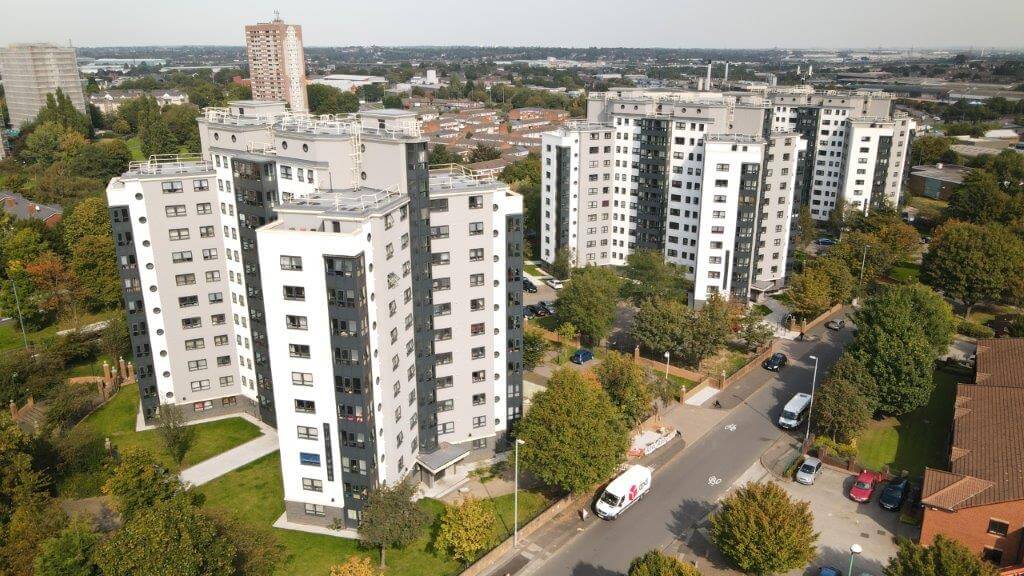
Under the Building Safety Act 2022, a higher-risk building is defined as a residential building that is at least 18 metres high, or seven storeys or more. This applies to tower block developments, apartment buildings and many forms of modern mass housing.
These buildings now fall under the authority of the Building Safety Regulator, which acts as the building control authority during design and construction. For procurement teams and housing managers, this changes the level of evidence required for every specified product. Fire doors, windows and external wall components must now carry a documented compliance trail from testing through to installation.
The Gateway regime is changing procurement
The introduction of the Gateway system under the Building Safety Act has transformed how higher-risk buildings are approved.
Gateway 2 is particularly important because it requires developers to secure approval from the Building Safety Regulator before construction begins.
This means every product specified for a tower block project must be backed by robust evidence.
What procurement teams should check
Before specifying products for higher-risk apartment buildings, procurement teams should confirm manufacturers can provide:
- Current BS EN 13501 test evidence
- Third-party accreditation
- Installation records
- Fire performance documentation
- Field of Application certification
- Product traceability information
Products without this evidence could delay approvals or require resubmission. As enforcement activity increases in recent years, documentation quality is becoming just as important as product performance itself.
The move from BS 476 to BS EN 13501
One of the biggest changes affecting tower blocks is the transition away from BS 476 fire testing classifications. The older national standard is being phased out in favour of the European classification system BS EN 13501, which is becoming the recognised benchmark for reaction-to-fire testing across the UK.
This shift has major implications for product specification. Products previously tested only under BS 476 may no longer satisfy regulator expectations for higher-risk buildings. Manufacturers must now provide evidence showing products have been tested and classified under BS EN 13501 standards.
For local authority procurement teams, this means reviewing existing specifications carefully.
Why this matters for windows and doors
Windows and doors are no longer treated as isolated components. They form part of the wider passive fire safety strategy for the building. When specifying products for tower block refurbishment or new build projects, housing providers should request:
- BS EN 13501 classification evidence
- Third-party certification
- Installation guidance
- Full traceability documentation
- Field of Application reports where applicable
Without this evidence, Gateway approvals may face delays.
Fire doors in tower blocks remain under scrutiny
Fire doors remain one of the most heavily regulated aspects of fire safety compliance in apartment blocks. Under the Fire Safety (England) Regulations 2022, responsible persons must carry out routine inspections of:
- Flat entrance doors
- Communal fire doors
- Self-closing devices
- Smoke seals and hardware
For high rise residential buildings, every fire door forms part of the strategy designed to slow the spread of smoke and flames.
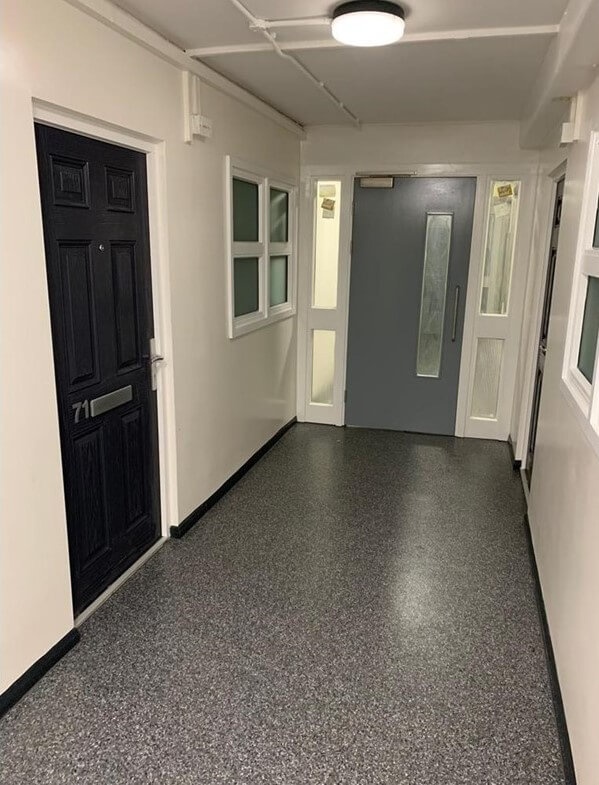
Understanding FD30 and FD60 requirements
Fire doors are classified according to the length of protection they provide during a fire.The most common classifications are:
- FD30 – 30 minutes fire resistance
- FD60 – 60 minutes fire resistance
These doorsets must be tested to recognised standards including EN 1634-1 and EN 1363-1.
Compliance extends beyond the door leaf itself. Frames, hinges, glazing, seals and locking systems must all match the tested specification.
One of the main factors regulators now examine is whether manufacturers can provide valid Field of Application documentation. This confirms which door sizes and configurations remain compliant beyond the original tested specimen.
Shelforce’s Fireshel fire doors are manufactured with this level of compliance in mind, supporting local authorities and housing providers working on high rise refurbishment projects.
What do the new rules mean for windows in tower blocks?
Windows are playing a larger role in modern fire risk assessments than ever.
In tower block projects, fenestration products must now form part of the documented external wall system. Fire performance information may be requested during Gateway reviews and future inspections. This is especially important in social housing refurbishment projects where windows contribute to:
- Smoke control
- Escape routes
- Compartmentation integrity
- Ventilation performance
- Resident safety
At Shelforce, reversible windows and tilt and turn windows are regularly specified for high rise housing projects because they support safe cleaning access, energy efficiency and fire egress requirements.
How local authorities can prepare for future compliance updates
Further regulatory amendments are expected, while consultations on additional fire safety reforms continue. Housing providers managing existing tower block stock should begin reviewing:
- Existing fire door records
- Window specification evidence </li.
- External wall system documentation
- Maintenance inspection schedules
- Contractor competency requirements
For local authorities overseeing public housing and large social housing portfolios, compliance planning should now be viewed as a long-term asset management issue rather than a short-term regulatory exercise.
Why experience matters in high rise projects
Working on higher-risk residential buildings requires specialist knowledge of compliance, specification and manufacturing standards. With more than 30 years of experience supplying products for local authority housing, Shelforce understands the operational pressures facing housing teams managing tower block projects across the UK.
Our experience across apartment blocks, high rise refurbishments and new-build residential buildings helps local authorities reduce compliance risk while maintaining safe, durable living space for residents.
Speak to Shelforce about tower block fire safety
Whether you are planning upgrades to existing housing unit stock or specifying products for new apartment buildings, Shelforce can support your project with compliant fire doors and high-performance window systems designed for high rise environments.
To discuss your next tower block project, contact Shelforce and speak to our team about fire-safe fenestration, certification requirements and compliance support.


 >
>