
Fire safety in local authority buildings depends on far more than certified fire doors alone. Every element within the building envelope, including uPVC windows and doors, plays a role in supporting compartmentation, smoke control and safe evacuation routes.
For housing teams and procurement professionals, understanding how these systems work together is essential for regulatory compliance and resident safety. Incorrectly specified doors, poorly fitted frames or unsuitable glazing systems can undermine a wider fire strategy, even where compliant fire doorsets are installed elsewhere in the building.
This guide explains how uPVC windows and doors fit within modern fire safety strategies, where standard products are appropriate, and when certified fire doors are required.
What role do uPVC windows and doors play in fire safety?
Many procurement teams assume fire safety is purely a fire door question. In practice, windows and doors are critical components of a building’s fire safety strategy – from preventing the spread of flames and smoke to allowing vital emergency access and escape routes.
Approved Document B addresses fire safety precautions that must be adhered to, to ensure the safety of occupants, firefighters and those close to the building in the event of a fire. The document covers all standards related to this, including means of escape, the ability to internally isolate a blaze to prevent a fire from spreading, external fire spread, firefighter access, fire detection and warning systems.
Within this framework, uPVC windows and doors serve three functions:
- Escape route provision – ground and lower floor windows must meet minimum opening dimensions to serve as an emergency outlet
- Compartmentation support – frames and glazing must not compromise the integrity of fire-resisting walls or corridors
- Smoke pathway control – poorly specified doors can allow smoke to bypass a fire division even without flames present
Your window and door specification is part of that passive system – not separate from it.
Understanding the difference between uPVC doors and fire doors
Standard uPVC doors are not fire doors. A fire door is a specially constructed door designed to slow the spread of fire and smoke between different parts of a building.
Fire-rated doors are designed, tested, and certified to withstand exposure to fire for a specified duration, usually 30 or 60 minutes. This performance is vital for allowing safe evacuation and for containing fires in a specific area. These doors include:
- Fire-resistant cores
- Intumescent seals
- Smoke seals
- Certified frames
- Self-closing devices
Standard uPVC front doors on dwellings, by contrast, are not tested to these standards. UPVC front doors are not fire compliant for use in locations where a rated doorset is required – such as flat entrance doors in multi-storey blocks.
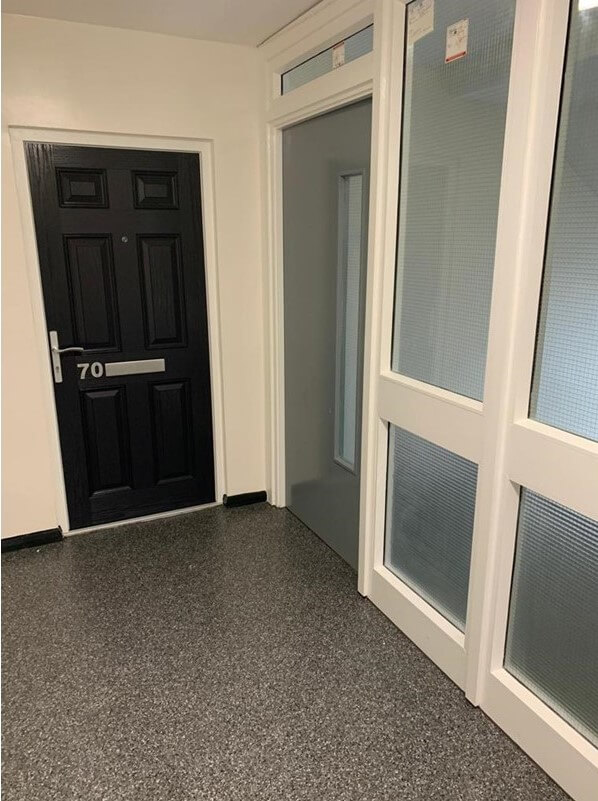
Building regulations require that flat entrance doors in buildings with multiple dwellings are fire-rated to at least FD30 and fitted with self-closing devices. The entrance door to each flat in a council block must therefore be a certified fire doorset, not a standard uPVC residential door – regardless of how energy-efficient or secure the latter may be.
Where uPVC windows and doors do support fire strategy
While uPVC windows cannot act as fire doorsets, they remain central to compliant fire safety design in local authority housing. Here is where they make a direct contribution:
Escape windows in lower-floor dwellings
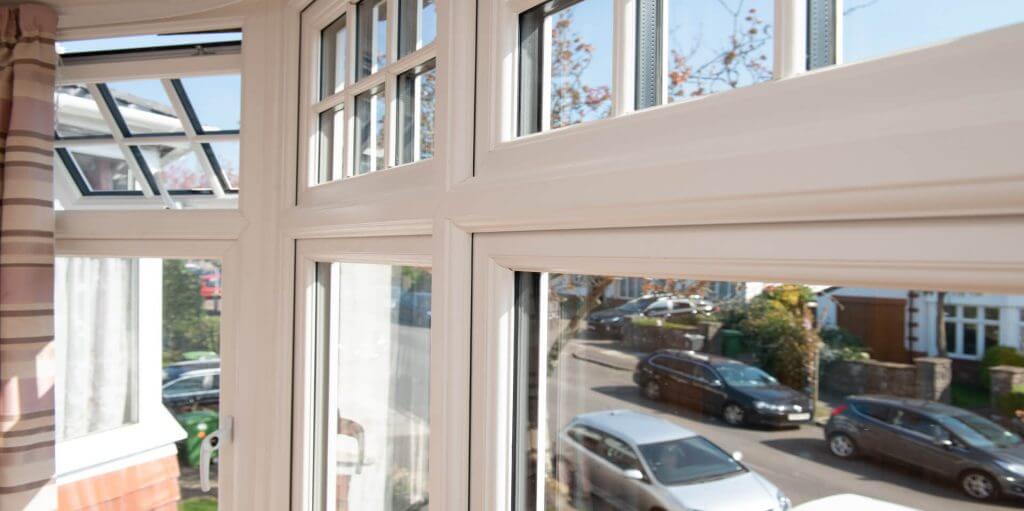
In some homes, particularly ground-floor dwellings, certain windows must function as escape windows. They must meet minimum size and opening regulations.
Correctly specified uPVC casement and tilt-and-turn windows can satisfy these requirements when openings are sized and configured to Approved Document B guidance.
For houses, all habitable rooms apart from the kitchen need either an opening that directly leads to a hall that leads to a final exit, or an emergency escape window or door.
Shelforce’s uPVC casement windows and tilt-and-turn windows are manufactured to specification and can be configured to meet escape opening requirements on a project-by-project basis.
Smoke bypass prevention
Any door that could provide a path for smoke to bypass the division should be fitted with a self-closing device.
Standard uPVC entrance doors in communal areas – where not specified as certified fire doorsets – must at minimum be fitted with self-closers if they sit on a smoke division. Procurement teams should check this at specification stage rather than during post-installation sign-off.
Why proper installation matters
Even high-quality uPVC products can fail to perform correctly if installation standards are poor. Gaps around uPVC frames, incorrect fixings or unsuitable sealing methods can compromise:
- Smoke containment
- Thermal performance
- Security
- Escape functionality
Proper installation should always be carried out by experienced teams familiar with public sector compliance requirements for peace of mind. This is particularly important when installing:
- Replacement uPVC windows
- New doors
- Double glazing systems
- New windows
- uPVC window frames
The many benefits of uPVC windows and doors
uPVC (unplasticised polyvinyl chloride) as a material comes with many other benefits for windows with both double a glazing and triple glazing, as well as advantages of uPVC doors. They include:
- Low maintenance and can be cleaned using soapy water and a damp cloth
- Excellent energy efficiency for low energy bills
- Excellent sound insulation
- Available in a range of colours
Can uPVC doors ever be used where a fire door is needed?
No. A standard uPVC door, however well made, has not been tested or certified to FD30 or FD60 standards.
Fire doors are classed as passive fire protection measures, meaning that their specific design acts as a barrier to slow down the spread of flames and smoke to other rooms. That design – the reinforced core, intumescent seals, smoke seals and tested door frame – cannot be replicated by a standard uPVC product.
Where you need a fire-rated entrance door with the low-maintenance and weather performance benefits associated with modern composite materials, a certified composite fire door is the appropriate choice.
Shelforce supplies it’s Fireshel fire door which has been fully tested to stop the spread of fire and are wholly compliant with the latest fire door regulations.
Why local authorities choose Shelforce for uPVC windows and fire doors
Providing high-quality window and door products, including modern uPVC windows in a wide range of styles, composite doors and fire doors to local authority building projects around the country, thanks to flexibility and quick lead times, Shelforce understands the specific challenges and priorities that housing managers face. With decades of experience as a window supplier and working on public housing projects, safety, reliability, and compliance are the priorities.
The Fireshel is the perfect solution for local authorities who need fully EN-tested, third-party accredited replacement fire door sets that are compliant with the latest 2020 MHCLG Annex A recommendations and the appropriate standards.
Working with a single specialist supplier for both your uPVC windows and doors and your certified fire doorsets removes the coordination risk that comes from splitting orders across multiple companies. It also gives procurement teams a single point of contact for compliance documentation, delivery timelines and aftercare.
Speak to Shelforce about uPVC windows and doors, fire doors and compliance
If you are planning a refurbishment, replacement programme or fire safety upgrade, Shelforce can support your project with uPVC windows and certified fire doorsets designed for local authority housing.
To discuss specifications, compliance requirements or lead times, contact our team. You can read more about Shelforce’s full fire door range here


 >
>