
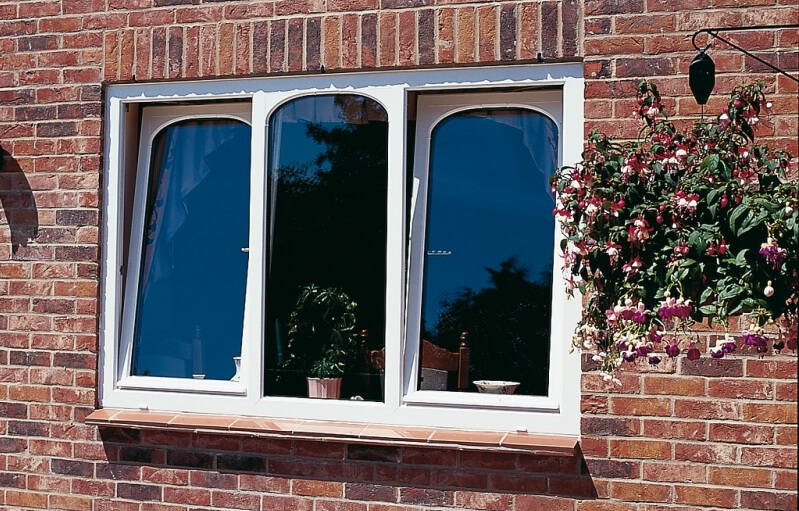
The short version is: tilt & turn windows are the most compliant, lowest-maintenance, and most versatile window type available for housing association stock. Keep reading for the regulatory detail, performance comparisons, and specification guidance that procurement teams and asset managers need.
What is a tilt & turn window?
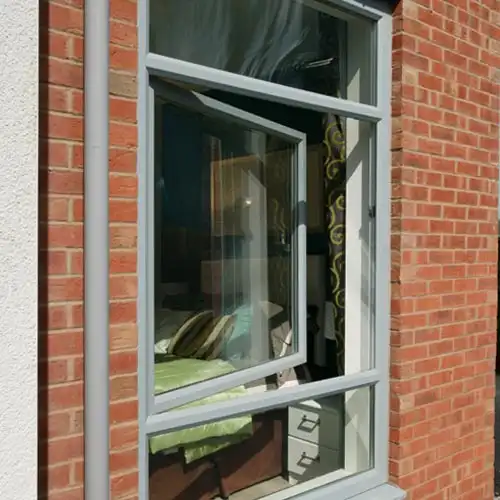
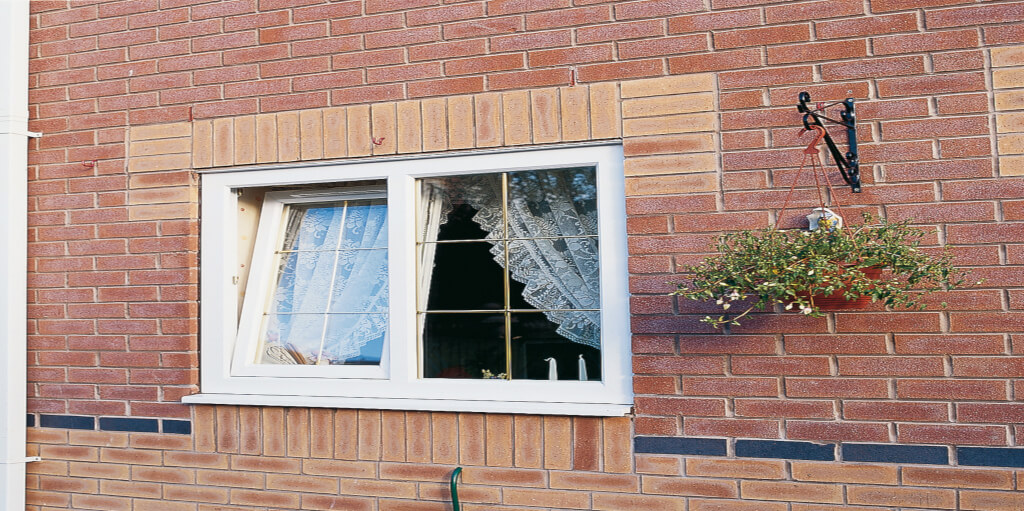
Using a single handle, a tilt & turn window provides effortless operation and the functionality of three different window types in one unit and three different positions: a fixed closed position, an in-swing casement position, and a top-tilt hopper position.
The handle position controls which mode is active:
Closed / locked – the multi-point locking system engages on all sides of the frame, creating an airtight and weather-resistant seal.
Tilt (handle 90°) – the top of the sash tilts inward by a controlled angle. Air circulates freely; the window cannot be opened further from outside.
Turn (handle 180°) – the window swings inward horizontally like a door, ideal for cleaning and quick egress.
Innovative tilt & turn windows provide unique inward-opening functionality, delivering high levels of natural ventilation and enabling safe, easy cleaning from within.
Shelforce offers casement, reversible, and tilt & turn styles of uPVC windows, with the tilt & turn option available as a standard uPVC product or as part of the aluminium window range for projects requiring contemporary aesthetics or enhanced structural performance.
Why tilt & turn windows matter for housing associations right now
Housing associations are operating in an environment of tightening compliance obligations.
The wider industry faces increasing pressures regarding regulations and compliance. The Building Safety Act’s golden thread requirements have introduced unprecedented demands for information, documentation of test evidence, and complete transparency on building products including windows and doors.
Window specification decisions that might once have been primarily aesthetic are now high-stakes compliance choices. The wrong product can fail under Approved Document K (fall prevention), Part F (ventilation), Part Q (security), or Approved Document B (fire egress) – sometimes more than one simultaneously.
Tilt & turn windows are engineered to address all four. The sections below explain each benefit in detail.
Occupant safety: how the tilt function prevents falls from height
Fall prevention is the most critical safety obligation for windows above ground floor level.
UK Government Building Regulations section K2 states that protection from falling is required where a person may fall through a window above ground floor level, requiring suitable opening limiters to restrain the window sufficiently to prevent such falls.
The tilt function on a tilt & turn window is structurally different from a conventional window restrictor.
One of the biggest security advantages comes with the tilt function. When tilted open, the window allows for ventilation while keeping the hinges securely locked, making it nearly impossible for anyone to force the window open from the outside.
This is significant for housing associations managing properties with vulnerable tenants.
The increased risk of vulnerable tenants falling from windows in high-rise social housing is crucial to factor in.
Social housing providers may prefer to err on the side of caution and fit window restrictors as standard on all windows from the first floor and above to prevent the risk of missing a potential risk to a vulnerable tenant who may move into a property.
With a tilt & turn window, the restricted opening is built into the hardware itself – there is no reliance on a separately fitted restrictor that could be removed or damaged over time.
Fire egress compliance: meeting Approved Document B
Buildings designated for social housing must adhere to a range of specialised requirements to effectively safeguard a diverse range of tenants. In the case of escape windows, all habitable rooms in buildings of one or two stories must be fitted with an escape window to protect tenants from potential fire risks.
In turn mode, a tilt & turn window opens fully inward.
The turn function offers an added safety benefit by allowing the window to open fully, making it an accessible emergency exit in case of a fire.
This means the window can serve simultaneously as a ventilation device, a cleaning access point, and a compliant fire escape opening – three functions from a single product.
The ability to turn the window and open it wide makes this an important safety feature and means of escape should a fire break out in the property.
Key requirement under Approved Document B: escape windows must provide a minimum clear opening area of 0.33m² with the bottom of the opening no more than 1,100mm above finished floor level. Shelforce tilt & turn windows are manufactured to accommodate these dimensions as part of standard specification.
Ventilation control: why one window is not enough on its own
A common misconception is that any opening window provides adequate ventilation and air flow. UK building regulations are more specific. Part F requires background ventilation (typically via trickle vents) alongside purge ventilation (openable windows).
Overheating: Approved Document O was published in 2021 and came into effect on 15 June 2022 and only applies to new dwellings.
However, its influence on refurbishment specifications is growing, particularly as housing associations work toward EPC band C targets.
The advantages of tilt & turn windows give housing associations a level of good ventilation precision that standard outward-opening casements cannot match. A tilt & turn window can also have up to four airtight seals across the frame. Most normal UK windows have just one.
That improved sealing directly reduces unwanted heat loss, supporting the energy performance improvements housing associations are required to deliver under Approved Document L.
Safe window cleaning from inside the building
This benefit is consistently undervalued at the procurement stage – until a maintenance team price the alternative. Cleaning the external face of windows on floors three and above typically requires hired access equipment, work-at-height risk assessments, and significant contractor cost.
The in-swing function of tilt & turn windows allows for easy cleaning of exterior glass from inside the home for peace of mind. There is no need for precarious ladders or extra preparation.
Regulations also require that windows can be safely cleaned from inside wherever possible.
For housing associations with tower block or medium-rise stock, specifying inward-opening windows is the most effective way to meet that requirement while controlling costs over the life of the product.
Tilt & turn is a unique inward-opening sash for buildings requiring high levels of natural ventilation that enables easy, safe cleaning from within. Tilt & turn windows also provide easy maintenance for residents.
Security performance: multi-point locking and PAS 24 compliance
Windows that are compliant with Part Q will be manufactured to a design tested to PAS 24:2021 security requirements. Shelforce tilt & turn windows are built to meet these standards.
Key product features include maximum ventilation with minimum risk of burglary, and a high security frame with multipoint locking system.
Tilt & turn windows are equipped with multi-point locking systems that secure the window at several locations around the sash. In tilt mode, the window is still locked at key points, preventing tampering.
This is a critical differentiator. A conventional casement window fitted with a separately purchased restrictor is only as secure as that single point of attachment. A tilt & turn window in tilt mode is locked around the perimeter by the espagnolette mechanism – the restrictive function and the locking function are the same hardware component.
uPVC tilt & turn windows come with advanced locking systems that provide extra security. They can be locked in the tilted position for ventilation while still providing protection against potential burglars.
Energy efficiency: A+ ratings and thermal performance for social housing stock
The risk of fuel poverty is a very real issue in low-income households, which is why windows designed for social housing are generally the most energy efficient and prevent energy loss. In line with the UK’s 2050 net zero carbon target, social housing providers are now aiming to attain a C rating on Energy Performance Certificates (EPCs) by 2030 for fuel poor households and 2035 for all other rented properties.
Shelforce’s tilt & turn windows proactively offer A+ energy ratings, exceeding the minimum energy rating regulations of C or above. As a direct result of thermally efficient windows, Shelforce has helped thousands of residents and homeowners save hundreds of pounds per year by reducing their energy bills with uPVC frames and double glazing.
Shelforce is a popular choice as it utilises top quality trade uPVC window products via market leaders Eurocell, safe in the knowledge that their window systems are constructed from the highest standard 100% recycled uPVC components, combined with the very best standards of workmanship.
Durability and low maintenance: the whole-life cost argument
Procurement decisions in social housing must account for whole-life cost, not just unit price.
For social housing projects, investing in durable, low-maintenance windows and doors is a decision that pays off in reduced costs, regulatory compliance, and long-term value.
Shelforce manufactures using Eurocell uPVC profiles. They are highly resistant to fading, warping, and cracking. Regular cleaning with mild soap and water is usually sufficient to keep them in top condition.
The inward-opening mechanism also protects the hardware from prolonged weather exposure. Where outward-opening casements expose hinges and stays to driving rain and frost cycling, the tilt & turn mechanism operates internally, extending functional life.
Durable, energy-efficient windows and doors not only reduce maintenance but also support environmental goals by limiting waste. By choosing materials that offer extended lifespans, such as tilt and turn upvc windows, social housing providers contribute to sustainability objectives.
Why housing associations choose Shelforce for tilt & turn windows
At Shelforce, decades have been spent developing strong partnerships with housing associations and their installers, with experience across all types of social housing refurbishment and maintenance.
Shelforce understands the unique needs of local authorities, having manufactured and supplied trade windows to local authorities for more than three decades, and has developed a comprehensive approach to simplify the procurement process.
Shelforce’s flexibility, competitive pricing, and quick lead times make it an ideal partner, while highly accredited products surpass PAS 24 standards and achieve A+ energy ratings as standard.
Supported by Birmingham City Council, Shelforce is one of their trade manufacturers, suppliers, and installers of choice for windows and doors.
Whether you are managing a rolling refurbishment programme, a tower block upgrade, or a new-build social housing scheme, Shelforce’s social housing specialist team can help.
Frequently Asked Questions:
1. Are uPVC windows safe for social housing?
Yes. uPVC windows are widely used in social housing because they are durable, secure, and compliant with UK Building Regulations. They resist weathering and can include reinforced frames and secure locking systems, which helps meet safety requirements in housing association properties.
2. Do uPVC windows meet UK building regulations?
Yes. uPVC windows must comply with UK Building Regulations, including requirements for thermal performance, safety glazing, and ventilation. Compliance is essential in social housing to meet legal standards and protect occupants.
3. How do windows improve safety in social housing?
Windows contribute to safety by supporting ventilation, secure locking, and controlled opening. Features such as window restrictors help prevent falls, especially in multi-storey buildings, while proper ventilation reduces risks linked to damp and poor air quality.
4. Do windows play a role in fire safety in social housing?
Yes. Windows can form part of a building’s fire safety approach when they meet regulation requirements. If used as an escape opening, they must comply with size and access standards, and where part of a fire strategy, they must meet tested performance criteria.


 >
>