
Fire doors are a legal requirement in many public buildings and multi-occupancy housing, yet too often they are overlooked until a compliance check or fire risk assessment highlights a problem. For building owners, councils and installers, the use of fire doors is not just about meeting fire safety regulations. It is about protecting the occupants of a building, limiting the spread of fire and smoke, and ensuring escape routes remain accessible in the event of a fire.
At Shelforce, we manufacture the Fireshel FD30 and FD60 composite fire door systems for local authorities and housing providers across the UK. Designed to meet the latest British standards and MHCLG 2020 Annex A recommendations, these solutions give landlords peace of mind that their properties meet today’s strict fire protection requirements.
Below, we explore how fire doors are tested, what makes a compliant fire door assembly, and why investment in high-quality door systems is essential for long-term safety and compliance.
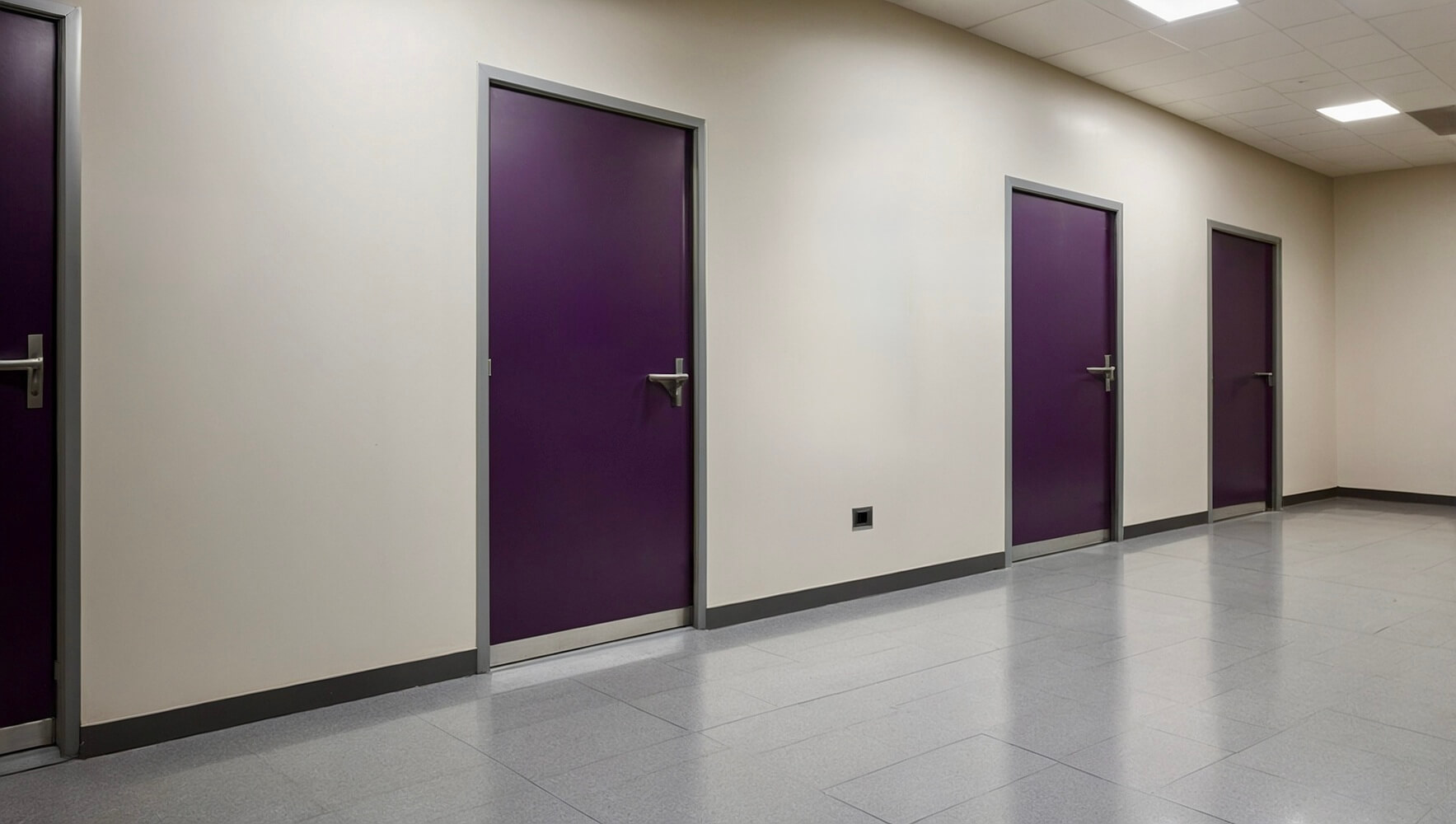
Fire-rated school doors in a UK corridor, ensuring safety and compliance with UK fire regulations.
Why are fire doors so critical for modern housing?
Fire doors are engineered to slow the spread of fire and the spread of smoke, buying vital time for the occupants of a building to escape safely. In the case of fire, a properly specified fire door can prevent heat transfer, smoke infiltration and structural collapse of the door frame for a defined period. The key reasons they matter include:
- Protecting escape routes such as corridors and stairwells
- Containing fire within its point of origin
- Reducing property damage and safeguarding adjacent flats
- Meeting the legal requirement for fire compartmentation under UK building regulations
- Supporting fire safety strategies for high-risk settings such as social housing
With updated guidance, heightened scrutiny and rising expectations following recent fire safety reforms, compliance has never been more important for building owners.
What should a compliant fire door include?
For a fire door to offer certified fire resistance ratings such as FD30 or FD60, every part of the fire door assembly must perform as intended. This includes the door leaf, hardware, smoke seals, intumescent seals, door frame and glazing (if present). Key features of a compliant door system typically include:
- A tested and certified door leaf offering proven fire resistance
- Intumescent seals that expand under heat to block gaps
- Smoke seals to limit smoke movement around the door
- Durable fire door hinges that maintain integrity under stress
- A secure door frame matched to the door’s rating
- Approved glazing panels when fire doors with glass are required
- Fire-rated hardware such as locks, handles and letterplates
Each component plays an essential role. If one fails, the entire system may fail.
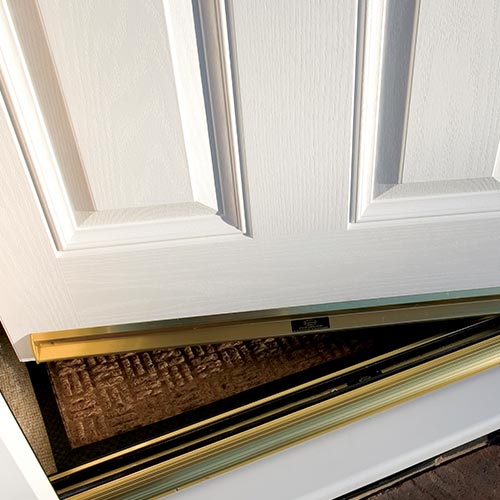
How are fire doors tested for fire safety performance?
Fire doors are subject to rigorous testing under British standards. Testing evaluates how long a door can resist exposure to a fully developed fire, how effectively it restricts heat transfer and how well it prevents the spread of smoke.
Fire resistance testing
Shelforce’s Fireshel FD30 and FD60 doors are tested to:
- EN 1634-1:2014 + A1:2018 for fire resistance
- EN 1363-1:2012 for general fire testing principles
These tests measure how long the door can prevent fire penetration. FD30-rated doors must provide a minimum of 30 minutes of resistance, while FD60 doors must provide 60 minutes.
Smoke control testing
To control smoke movement, doors must also meet EN 1634-3:2004 for smoke control This ensures a fire door can slow smoke spread, giving residents and emergency services extra time to respond.
Future compliance
Fireshel doors are tested to meet forthcoming EN 14351 CE requirements, ensuring that installations remain compliant as regulations evolve.
What makes the Fireshel fire door different?
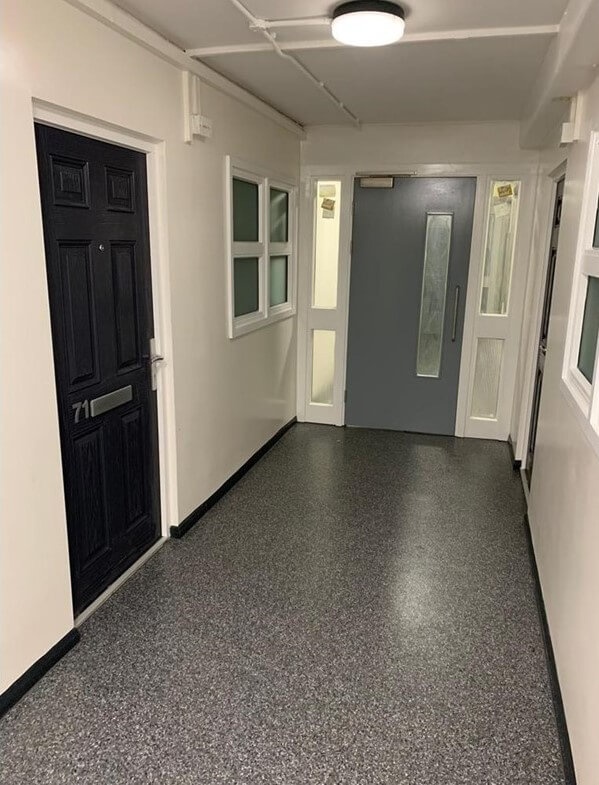
Shelforce manufactures the Fireshel range with durability, security and long-term safety in mind. These composite external doors are designed specifically for social housing, high-rise buildings and public sector projects where reliability is crucial.
Built to the latest standards
Fireshel fire doors comply with MHCLG Annex A (2020) guidance and hold Q-Mark installation certification, demonstrating consistent performance.
Superior construction
- High-quality, burglar-resistant composite materials
- WinkhausFD30/FD60 FireFrame® outerframe
- Slim sightlines for internal fire doors
- Optional fanlight glazing with approved fire-rated panels
- Easy-clean finishes suited to heavy-use environments
Security as standard
For building owners balancing fire protection with security, Fireshel doors offer:
- PAS24 security testing
- Compliance with Approved Document Q
- WinkhausAV2 auto-locking multi-point lock
- TS008 compliant hardware
- Robust fire door handles and hinges
This combination supports both fire safety and safeguarding requirements in multi-occupancy housing.
Long-term performance
Fireshel doors come with a 10-year guarantee, reflecting confidence in their durability and ongoing compliance.
What is the biggest risk building owners face with fire door compliance?
The most common issues identified in audits include:
- Incorrect or non-compliant door frames
- Missing or damaged intumescent seals
- Unauthorised modification to hardware
- Gaps exceeding permitted tolerances
- Lack of certification
- Poor maintenance over time
Each of these can compromise fire protection and expose landlords to significant regulatory and legal risks.
Why should councils and landlords invest in high-quality fire doors?
For councils and housing providers, investment in certified fire doors is both a safety obligation and a long-term asset.
Benefits include reduced compliance risk under fire safety regulations, improved protection for tenants, long service life and lower maintenance requirements, peace of mind that properties meet current building regulations and reduced liability in the event of a fire.
High-quality fire doors provide reliable performance. Cheaper alternatives often require replacement sooner, adding unnecessary costs.
What should councils consider when specifying fire doors?
- Certification to recognised British standards
- Proven fire resistance ratings such as FD30 or FD60
- Compatibility with existing door frames
- Whether external doors or internal fire doors are required
- Installation by certified installers
- Future compliance with evolving standards
- Supplier expertise and track record
Working with a trusted manufacturer like Shelforce ensures accuracy from specification to installation.
Speak to Shelforce for further information
If you are an installer, council or housing provider specifying fire doors for your next project, Shelforce can help. We manufacture high-quality composite fire doors designed specifically for social housing and local authority needs, supported by robust testing, certification and installation guidance.
Contact our expert team today to discuss your fire safety requirements and ensure your properties meet all relevant fire safety standards.
Key takeaways
Fire doors are a legal requirement in multi-occupancy housing and public buildings, and certified fire doors slow the spread of fire and smoke, safeguarding escape routes. Fireshel FD30 and FD60 fire doors meet the latest British standards and MHCLG guidance and landlords and councils reduce compliance risks by investing in high-quality, tested door systems
Frequently Asked Questions
How often should fire doors be inspected?
Fire doors in multi-occupancy housing should be checked at least every six months, with more frequent inspections in high-traffic areas.
Can fire doors include glazing?
Yes. Fireshel offers compliant glazing options using approved fire-rated panels.
Are composite fire doors suitable for external use?
Fireshel composite doors are designed for long-term durability and security, making them ideal external doors for social housing and local authority buildings.


 >
>