
High-rise and multi-storey council blocks place heavy demands on their windows. They must open safely at height, ventilate flats without creating fall or security risks, keep heat in and withstand decades of daily use with minimal upkeep.
For local authority asset managers planning window replacement programmes, uPVC tilt and turn windows answer several of those demands at once. They allow safe internal cleaning, controlled ventilation and strong thermal performance, all of which matter more than ever as Awaab’s Law tightens landlords’ legal duties on damp and mould.
As a Birmingham City Council-owned manufacturer, Shelforce produces tilt and turn windows for social housing programmes in Birmingham and beyond. This guide draws on that experience to explain why the format suits council high-rise housing and what to check when specifying it.

Why do uPVC tilt and turn windows suit council high-rise housing?
A tilt and turn window opens in two distinct ways from a single handle. That versatility makes it a popular choice for multi-storey residential blocks, where one window has to meet several practical needs that include:
- Safe cleaning: the sash swings inward, so outer glass can be cleaned from inside the flat.
- Controlled ventilation: the tilt position lets fresh air in through a narrow gap at the top of the window.
- Security: the multi-point locking system stays engaged while the window is tilted.
- Durability: uPVC frames need little upkeep over a long service life.
A standard casement window swings outward on a side hinge. Turn windows open into the room instead, keeping the sash within the building line. On upper floors, that difference has real consequences for safety and day-to-day maintenance.
How does the dual opening action work?
The tilt function: controlled airflow at height
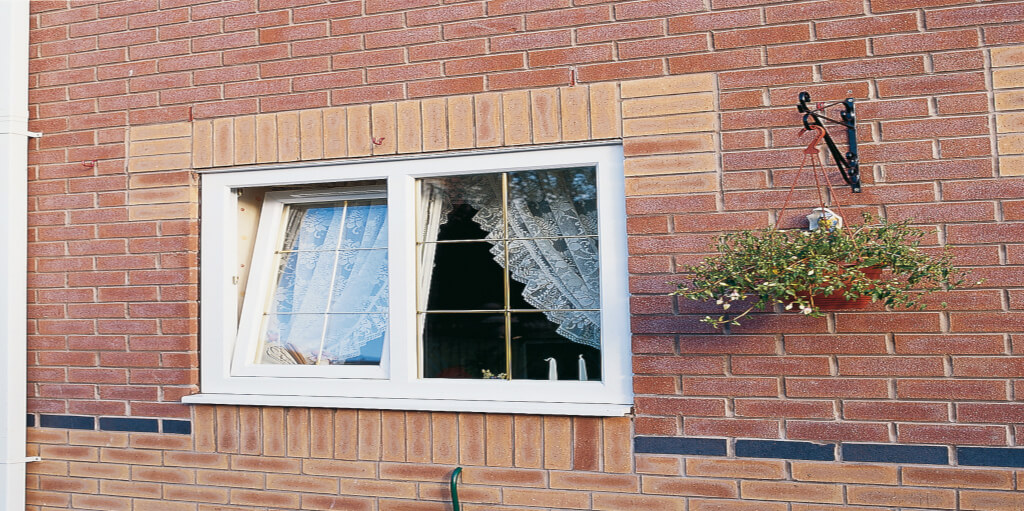
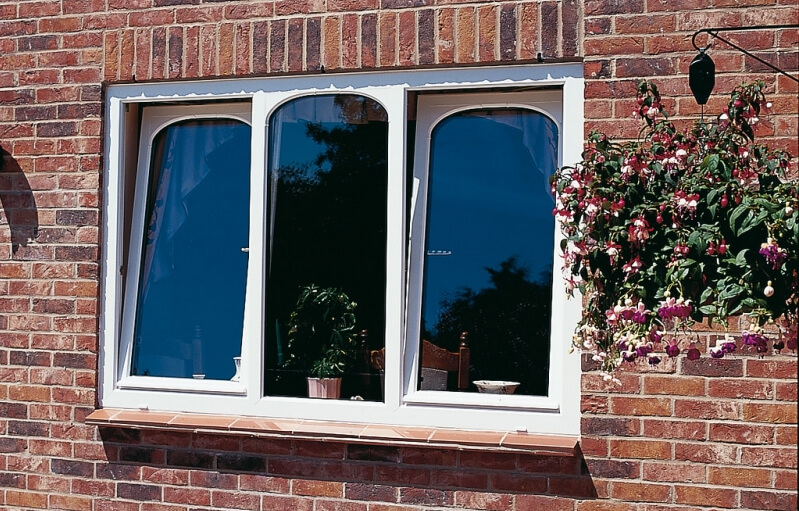
Turn the handle one way and the sash tilts inward, opening a narrow gap at the top of the window. The tilt function provides background ventilation without creating a wide opening that could pose a fall risk. For flats several storeys up, that restricted opening is a significant safety advantage.
The turn function: easy cleaning from inside
Turn the handle the other way and the sash opens fully on a side hinge, swinging into the room like a door. The turn function allows easy cleaning of the outer glass from inside the building.
For any block above ground floor, this removes the need for ladders, scaffolding or specialist access equipment each time the windows need attention. Across a large estate, avoiding repeated access costs makes a measurable difference to maintenance budgets.
Tackling damp and mould under Awaab’s Law
What the law requires of social landlords
Awaab’s Law took effect on 27 October 2025. It sets strict legal timeframes for social landlords dealing with significant hazards, including damp and mould. Landlords must:
- Investigate significant hazards within 10 working days.
- Provide a written summary of findings within 3 working days of the inspection.
- Carry out the relevant safety work within a further 5 working days.
Where poor ventilation or another building deficiency is responsible, the landlord must address that underlying cause. Wiping away mould or advising tenants to open windows will not meet the requirement.
How flexible ventilation supports compliance
Damp and mould rarely have a single cause. They usually result from a combination of poor thermal performance, insufficient heating, inadequate ventilation and weak retrofit design. Faulty or poorly ventilating windows sit squarely within that chain.
The tilt position offers flexible ventilation that reduces condensation build-up without fully opening the sash. Overnight or during low-occupancy periods, it maintains a safe, restricted airflow that keeps moisture levels down.
Phase 2 of Awaab’s Law, due in 2026, will bring a wider range of hazard categories under the same framework. Excess heat, caused in part by poor ventilation, is one of them.
Secure ventilation for residents on upper floors
Night-time ventilation is a common concern on high-rise projects. Residents on upper floors may be reluctant to sleep with a window open, and some building management policies restrict it.
The tilt position provides secure ventilation. The sash opens only at the top through a restricted angle, while the multi-point locking system remains engaged around the frame perimeter. Fresh air can circulate without leaving the flat vulnerable.
Shelforce’s uPVC tilt and turn windows feature:
- A high security frame with a multi-point locking system
- Burglar-proof hardware, including handles, seals and ironmongery
- Secured by Design approval from the official police security initiative
Energy efficiency and Part L compliance
Replacement windows in existing dwellings in England must achieve a maximum U-value of 1.4 W/m²K or a minimum Window Energy Rating of Band B. This is set out in Approved Document L (2021 edition, incorporating 2023 amendments). The same threshold applies in Wales under the 2022 edition of Approved Document L1, and in Scotland under Section 6 of the Building Standards Technical Handbook.
Shelforce’s uPVC tilt and turn windows are rated A+ for energy efficiency, comfortably exceeding the Band B minimum. That performance comes from:
- A multi-chamber uPVC frame, with dead-air columns that reduce conductive heat loss across the profile
- Double glazing fitted as standard
- The option of triple glazing where a scheme sets higher thermal targets
Warmer internal surfaces are also less prone to condensation, so thermal performance and damp prevention go hand in hand.
Low maintenance modern uPVC for large portfolios
Modern uPVC does not require painting, does not rot and performs consistently across the temperature ranges typical of UK housing stock. For a housing department managing a large portfolio, lower maintenance over the life of each window translates directly into reduced reactive spend.
Shelforce’s experience manufacturing for social housing
Shelforce is a Birmingham City Council-owned manufacturer of uPVC windows and doors, operating from a lean manufacturing facility in Birmingham. Alongside tilt and turn uPVC windows, the range includes casement and reversible windows, all manufactured to support fast turnaround on social housing contracts.
Shelforce also holds ISO 45001 certification for occupational health and safety and is a King’s Award for Enterprise winner (2023, Promoting Opportunity), credentials that contribute to social value scoring in framework and tender submissions.
Plan your window replacement programme with Shelforce
Our team works with local authority procurement officers and main contractors from initial specification through to delivery and can provide documentation to support framework submissions.
Contact our team today to discuss your programme and receive project-specific pricing. Phone: 0121 603 5262. Email: shelforcesales@birmingham.gov.uk


 >