
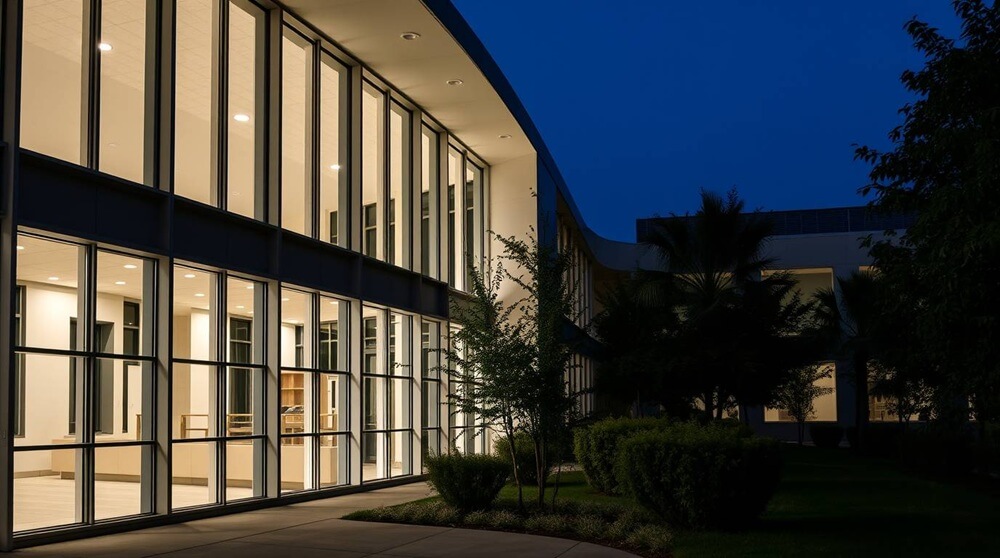
Fire safety remains a central concern for local authorities responsible for schools, social housing, care facilities and civic buildings across the UK. Recent scrutiny of building design has reinforced the need for practical, compliant solutions that support safe evacuation, everyday usability and long-term durability. Windows play a far more active role in this discussion than many assume.
Tilt and turn windows are increasingly specified in public sector projects because they support safer building design in different ways. They provide reliable emergency exit options, controlled ventilation and a strong compliance profile, while remaining practical for daily use and maintenance. For specifiers working in fire-sensitive environments, this style of window offers a balance of safety, functionality and peace of mind.
As a long-established UK manufacturer supplying uPVC windows to local authorities, Shelforce understands how specification decisions affect safety, compliance and long-term building performance. This guide explains why tilt and turn windows are a popular choice in public buildings and how to select them responsibly.
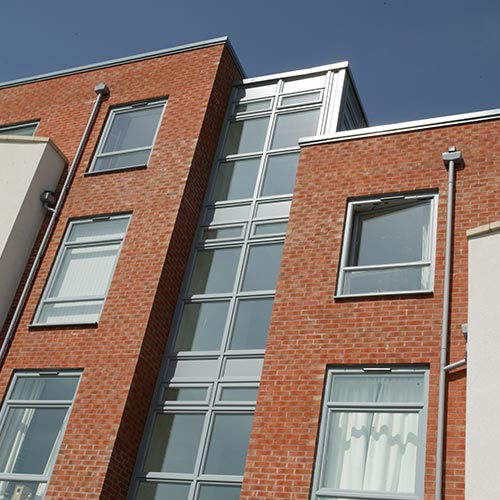
What makes tilt and turn windows different?
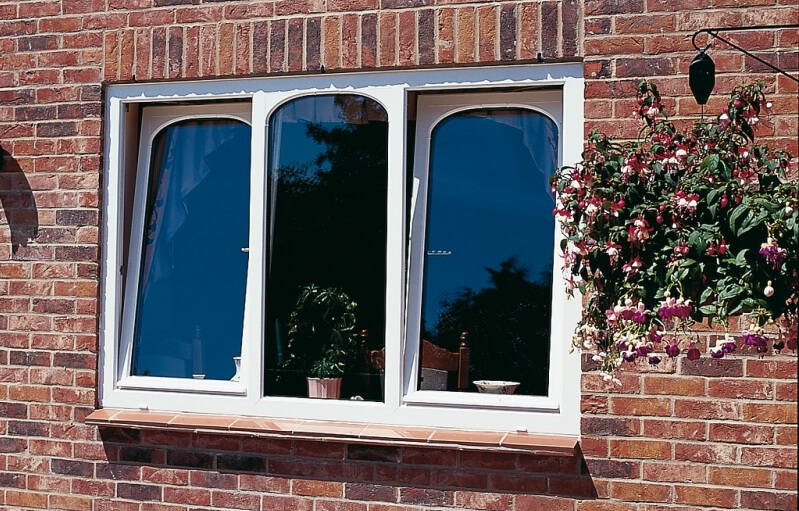
Tilt and turn windows operate using two distinct opening modes built into a single window sash. Through specialised hinges and locking systems, the window can open in different ways depending on handle position.
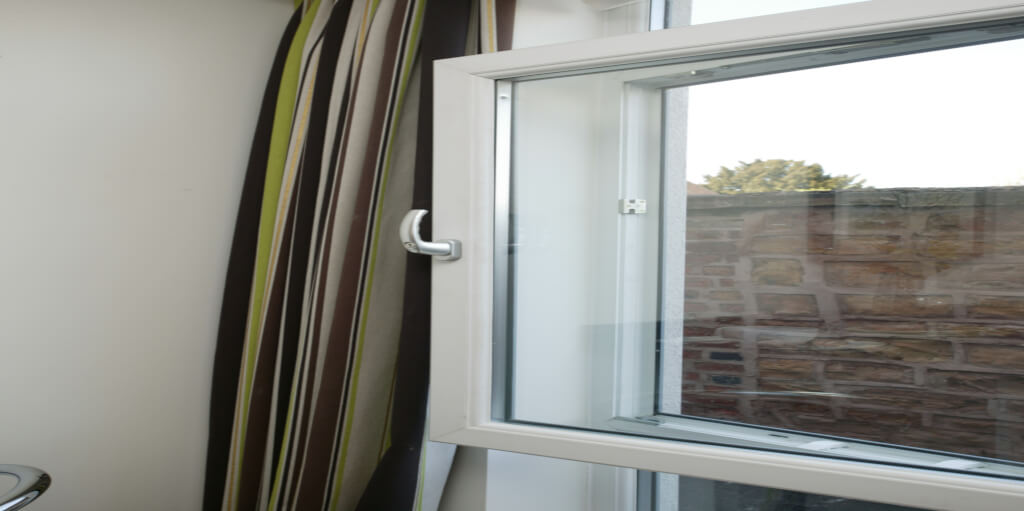
- Tilt position: the top of the window tilts inward, allowing controlled ventilation
- Turn position: the window opens inward from the side, like a casement window
This dual functionality sets them apart from traditional windows such as standard casement or sash designs. The ability to switch between a secure ventilation mode and a wide opening is central to their value in public sector buildings.
Shelforce tilt and turn windows are manufactured in durable uPVC and aluminium options, offering flexibility in material choice while meeting demanding public sector standards.
Why are tilt and turn windows effective for fire safety?
Reliable emergency exit routes
In an emergency, windows may form part of an escape strategy, particularly in residential blocks and low-rise public buildings. When used as fire escapes, access, opening size and ease of operation are critical.
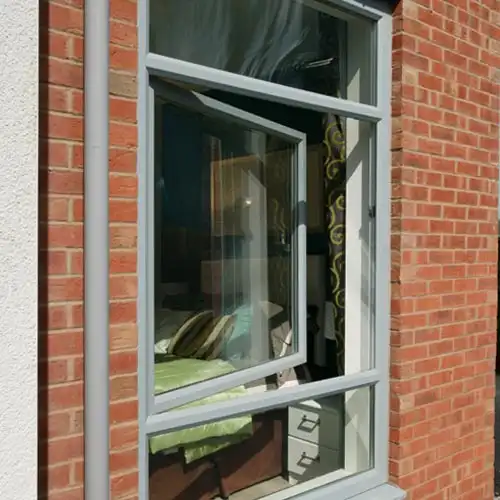
In the turn position, tilt and turn windows provide a wide opening that allows easy access for occupants or rescue services. Unlike many traditional windows, the full window frame opening can be used, rather than being restricted by a fixed sash or mullion. The wide opening supports:
- Use as an emergency exit where permitted by design
- Faster access through the sides of the window
- Safer evacuation routes when doors are inaccessible
For buildings where windows contribute to fire escapes, this design offers clear practical advantages.
Controlled ventilation without compromising safety
Ventilation is essential for occupant comfort and building health, yet open windows can introduce safety risks. The tilt function allows fresh air to enter from the top of the window while maintaining security and control.
This is especially valuable in:
- Schools and childcare settings
- Care homes and supported housing
- Offices and civic buildings with vulnerable occupants
By limiting the opening size, tilt ventilation reduces fall risk while supporting air circulation. According to UK Health Security Agency guidance, good ventilation helps reduce the spread of airborne contaminants, reinforcing the value of safe fresh air strategies in public buildings.
Compliance considerations for local authorities
When correctly specified, they can. Local authorities must ensure windows comply with relevant Building Regulations including Approved Document B for fire safety and Approved Document K for protection from falling.
Key factors to consider include:
- Minimum opening sizes for emergency exit use
- Safe opening restrictors where required
- Correct positioning within the building layout
- Full system testing of the window frame, hinges and hardware
Shelforce designs tilt and turn windows specifically for public sector use, supporting compliance through robust construction, clear documentation and consistent manufacturing standards.
Material choice, durability and everyday performance
Public buildings demand windows that perform reliably over decades, not just during inspections. Shelforce tilt and turn windows are available in uPVC, offering specific advantages including:
- Proven durability in high-use environments
- Low maintenance and easy cleaning from inside
- Strong energy efficiency performance
- Available in a range of colour options suitable for modern homes and public buildings
Practical benefits beyond fire safety
While fire safety is a core consideration, tilt and turn windows also deliver everyday benefits that support long-term value.
- Easy cleaning thanks to inward opening access to both sides of the glass
- Improved natural light compared with some traditional windows
- Flexible functionality for different rooms and uses
- Secure ventilation without fully opening the window
- Compatibility with new windows programmes and refurbishment projects
For homeowners in social housing and occupants of public buildings, this versatility improves comfort without adding complexity.
Guidance for specifying tilt and turn windows in fire-sensitive environments
When selecting windows for fire-sensitive settings, local authorities should prioritise clarity and evidence over assumptions.
Best practice includes:
- Confirm whether the window is intended as an emergency exit
- Check opening dimensions in the turn position
- Ensure restrictors and safety features align with occupant needs
- Specify tested hardware including hinges and locking systems
- Review installation quality and ongoing maintenance requirements
Working with an experienced UK manufacturer helps reduce risk and ensures specification decisions stand up to scrutiny.
Key takeaways
- Tilt and turn windows support safer building design through wide opening emergency exit options
- Dual opening modes allow controlled ventilation without compromising safety
- Suitable for public sector use when correctly specified and installed
- uPVC windows offer durability, easy cleaning and strong energy efficiency
- Compliance relies on the full window system, not just the opening style
Ready to review your window strategy?
If you are specifying windows for schools, housing or public buildings, Shelforce can support you with compliant tilt and turn window solutions designed for durability, safety and long-term performance. Contact our team to discuss your project requirements and ensure your window specification supports fire safety, usability and regulatory confidence.
FAQs : Tilt and Turn windows and Fire Safety
Are tilt and turn windows suitable for use as fire escapes?
Yes. Tilt and turn windows can be suitable when opened in the turn position, as this provides a wide, clear opening. This makes them
Can windows be used as fire escape routes?
Yes. Windows can be used as part of a fire escape route if they meet UK Building Regulations for escape openings. They must be easy to access, simple to operate, and large enough to allow occupants to exit safely in an emergency.
What size should a fire escape window be in the UK?
Fire escape windows must meet minimum dimensions set out in Approved Document B. Typically, the clear opening should be at least 0.33 m², with minimum height and width requirements, and positioned so it can be easily reached.
Do windows need to meet fire safety regulations in the UK?
Yes. Windows used as part of an escape strategy must comply with UK Building Regulations, including Approved Document B. This covers opening size, accessibility, and safe operation in an emergency.


 >
>